
Signs your car needs an alignment
Wheel alignment is easy to skip because nothing dramatic happens when it's off. Instead it quietly wears your tires out faster…
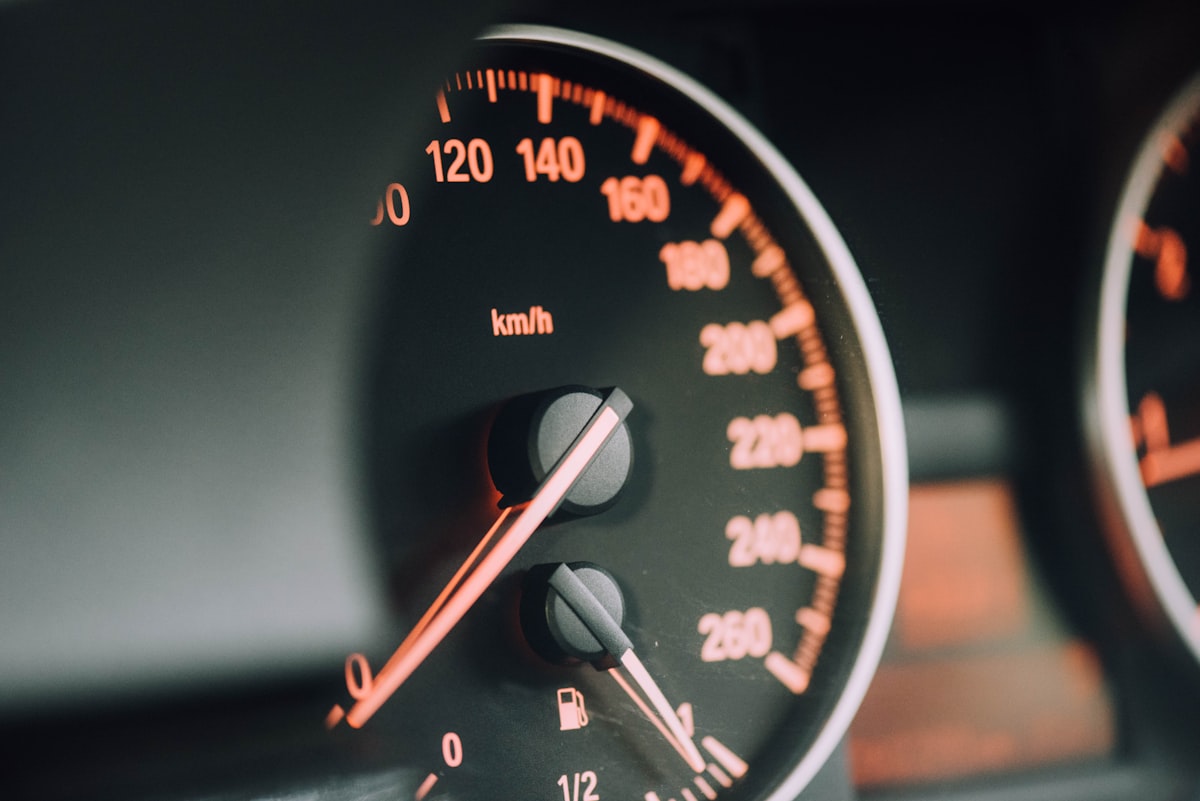
There is a specific, low-grade dread in a car that starts, but only just. It turns over longer than it should, cranks a few times, maybe catches and nearly stalls, and then finally settles into a run. It got you to work, so it is easy to shrug off — but a car that is hard to start is a car heading toward a car that will not start at all, usually on the least convenient morning. The useful thing is that “hard to start” is a different problem from “won't start,” and the details of how it struggles point at what is wrong. Here is how to read it.
The first fork in the road is whether the engine is turning over slowly or turning over fine but taking a long time to actually fire. They sound similar in the moment but mean different things.
Slow cranking — a tired, labored rrr…rrr as if the starter is dragging — is usually electrical: the battery, the connections, or the starter. Long cranking — the engine spins over at a normal, healthy speed but cranks and cranks before it catches — is usually about fuel or spark: the engine is turning fine, it is just not getting what it needs to light off promptly. Noticing which one you have tells you and us which half of the car to look at.
The most common cause by a wide margin, especially as the weather cools. A battery near the end of its life still has enough to crank the engine slowly, but not the punch to spin it briskly, so cold mornings become a struggle. If your car is hard to start when cold and better when warm, the battery is the first suspect. Our piece on how long a battery lasts and its warning signs covers this in depth.
Sometimes the battery is fine but the crusty corrosion on the terminals, or a loose cable, is throttling the current on its way to the starter. It is a cheap fix when that is all it is, and worth checking before condemning anything bigger.
A starter on its way out can crank slowly, or click, or engage intermittently. It often gives you warnings — the occasional refusal, an odd noise — before it fails outright.
If the engine spins normally but takes several seconds to catch, weak spark from worn plugs or a failing coil is a common reason, because a cold engine needs a good, strong spark to light promptly. These often cause a rough idle too, so the two complaints tend to travel together.
The engine needs fuel at the right pressure the instant you crank. A weak fuel pump, a leaking-down fuel pressure that bleeds off overnight, or clogged injectors can all mean the engine has to crank longer to build what it needs — classic “hard to start after sitting overnight, fine the rest of the day.”
Modern engines rely on sensors to get the cold-start mixture right. A sensor feeding the computer bad information — a coolant temperature sensor, for instance — can make the engine hard to start cold even though everything mechanical is fine. This is where reading the codes and the live data earns its keep.
A few observations make the diagnosis much faster.
The reason to act rather than adapt: people are remarkably good at unconsciously working around a hard-starting car — a couple of tries, a certain pedal trick, holding the key a beat longer. That works right up until the morning it does not, and then it is a no-start and a tow. A hard start is the warning stage, which is exactly when it is cheapest and least stressful to fix.
Because “hard to start” spans two very different systems, the diagnosis starts by sorting which one it is. We test the battery under load and check the charging system and the connections on the electrical side, and check fuel pressure, spark, and the sensors that manage a cold start on the other. We pull any stored codes and, ideally, catch the car in the act — a cold morning start tells us more than a warm one in the afternoon. That is how you avoid the trap of replacing a perfectly good part because it seemed like the likely one. You get told what actually failed, and the price, before we do the work.
Two common reasons. If it cranks slowly when cold, it is usually a weakening battery that has less to give in the cold and recovers as the day warms. If it cranks at normal speed but takes several seconds to catch after sitting overnight, fuel pressure bleeding down overnight or weak spark is more likely. Which of the two it is decides where to look.
Possibly, which is why it is worth dealing with now. A hard start is the warning stage before a no-start. Most of the causes — a dying battery, a weak fuel pump, a failing starter — get worse, not better, and they tend to finally give up at the least convenient moment. Catching it while the car still starts is far cheaper and less stressful than after it doesn't.
Often, but not always. A weak battery is the most common cause, especially with slow cranking in cold weather. But long cranking with a normal-speed engine points at fuel or spark instead, and sometimes a good battery is being starved by corroded connections. The right step is to test the battery and charging system rather than just replacing the battery and hoping.
If the engine spins at a healthy speed but cranks for several seconds before firing, the electrical side is probably fine and the issue is fuel or spark — worn spark plugs, a fuel pump or pressure problem, dirty injectors, or a sensor giving the computer bad cold-start information. It usually needs the fuel pressure, spark, and codes checked to pin down which.
It depends entirely on the cause — a battery or clean connections are modest, spark plugs are moderate, a fuel pump or starter is more. That is why the diagnosis matters, so you fix the actual problem once. We go over what we find, and the price, before any work. Call (253) 375-7057 for a straight answer.
A car that is hard to start is giving you a warning most people only get once. We are on Meridian E in Graham, open Monday to Friday, and we will sort out whether it is battery, starter, fuel, or spark, and fix the right thing. See how we diagnose, call (253) 375-7057, or book a time online.
Bring it in and we will tell you what it actually needs. Open Monday to Friday, 9am to 5pm.
Wheel alignment is easy to skip because nothing dramatic happens when it's off. Instead it quietly wears your tires out faster…
You start the car and it lets out a loud squeal from under the hood that fades as the engine settles. It almost always comes from…
A car battery is one of the few parts that will, with certainty, fail eventually — on a timeline you can mostly predict. Yet most…
Tell us the noise, the light, or the mileage. We will tell you what it takes.