
How often should you rotate your tires?
Tire rotation is one of the cheapest, most-skipped pieces of maintenance there is — and skipping it wears out a set of tires…
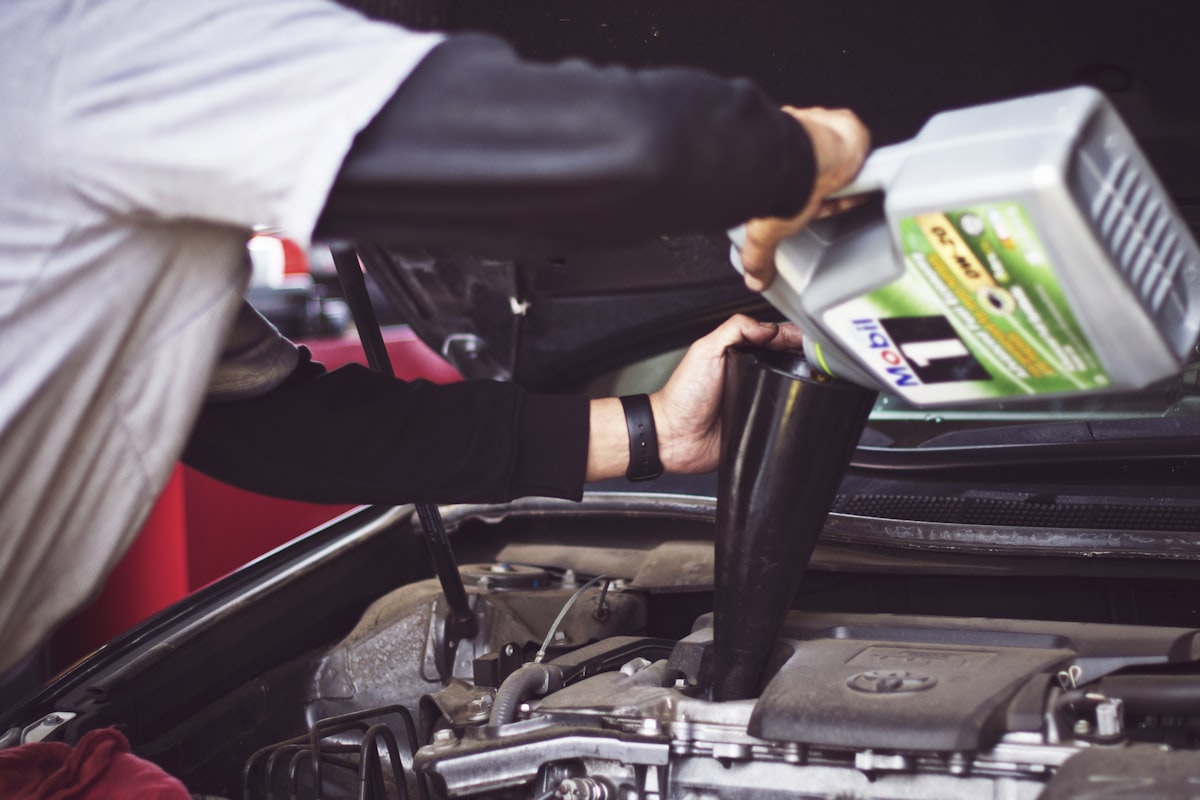
You go to check your oil, or the low-oil light flickers, and you find the level down again — but there is no puddle on the driveway. Where is it going? A car that uses oil without leaking it is burning it, somewhere inside the engine, and it is one of the more common things we see on higher-mileage cars. A little consumption can be normal; a lot is a warning. Here is how to tell the difference, what causes it, and what your options actually are.
The first thing to sort out is whether the oil is leaking out or burning inside, because they are different problems with different fixes. A leak leaves evidence — spots where you park, oil on the underside of the engine, a burning smell as it drips onto hot parts. Burning oil leaves the car through the exhaust instead, so the tell is different: the level drops with no puddle, and you may see faint blue-tinged smoke from the tailpipe, especially on start-up or hard acceleration. If you are topping up oil regularly but never find a leak, the engine is burning it.
Here is the part that surprises people: some oil consumption is normal, and the amount that counts as "too much" is higher than you might think. Many manufacturers consider up to a quart every 1,000 to 2,000 miles to be within spec, particularly on higher-mileage engines, and some newer engines are designed to use a little by nature. So a car that needs a top-up between oil changes is not automatically in trouble. What matters is the trend: an engine that has always used a bit and stays steady is one thing; one that suddenly starts drinking oil, or needs a quart every few hundred miles, is telling you something is wearing out. The single most important habit here is simply checking your oil regularly, because an engine run low on oil is how a consumption problem becomes a destroyed engine.
Oil gets into the combustion chamber, where it should not be, in a handful of ways:
This is where an honest shop matters, because the fixes range from cheap to not-worth-it, and the right answer depends on the car. If it is the PCV system or the wrong oil, that is a straightforward, affordable fix. Worn valve seals are a moderate job. Worn piston rings, on the other hand, mean internal engine wear, and the repair — effectively rebuilding or replacing the engine — often costs more than a high-mileage car is worth. In that case the honest advice is frequently not to chase it: keep an eye on the level, top it up as needed, and run the car as long as it stays reliable, rather than pouring thousands into it. We would rather tell you that than sell you an engine job on a car that does not warrant one. Which situation you are in is exactly what a proper look under the hood — and sometimes a compression or leak-down test — tells us.
It depends how much. Some consumption — up to around a quart every 1,000 to 2,000 miles on many engines — is considered normal, especially at higher mileage. The concern is a car that suddenly starts using much more than it used to, or needs topping up every few hundred miles. Checking the level regularly is what keeps a manageable habit from becoming a wrecked engine.
A leak leaves spots where you park and oil on the engine; burning oil leaves no puddle but the level still drops, often with faint blue smoke from the tailpipe on start-up or under acceleration. If you are topping up regularly and never find a leak, the engine is burning it internally.
Usually oil getting into the combustion chamber through worn valve seals or piston rings, or being pulled in by a stuck PCV system. The wrong oil grade or long-overdue oil can make it worse. The PCV and oil-grade causes are cheap to fix; worn rings are internal wear and a much bigger job, which is why diagnosing which it is matters.
Sometimes that is genuinely the right call. If the cause is worn piston rings on a high-mileage car, the repair can cost more than the car is worth, and keeping the level topped up while you run the car is often the sensible, honest choice. What you cannot do is stop checking — an engine that runs low on oil will not last. We will tell you honestly which situation you are in.
It ranges enormously — from an inexpensive PCV or oil-service fix to an engine job that may not be worth doing on an older car. That is exactly why we diagnose the cause first and give you a straight recommendation, including when the answer is to leave it alone. Call (253) 375-7057 for a straight answer for your vehicle.
If your car is drinking oil and you are not sure whether it is normal, a cheap fix, or something to just monitor, we will find the cause and tell you honestly what is worth doing. We are on Meridian E in Graham, open Monday to Friday. See what our oil service covers, call (253) 375-7057, or book a time online.
Bring it in and we will tell you what it actually needs. Open Monday to Friday, 9am to 5pm.
Tire rotation is one of the cheapest, most-skipped pieces of maintenance there is — and skipping it wears out a set of tires…
Premium fuel looks like the responsible choice, and the price gap adds up. Does your car actually need it, or is regular fine?…
A sharp, sulfur, rotten-egg smell points at one part of your car — and while it's rarely a stop-now emergency, it's a fuel or…
Tell us the noise, the light, or the mileage. We will tell you what it takes.