
Why does my car's heater blow cold air?
Few things are less welcome on a frosty morning than a heater that blows cold. It's more than a comfort problem in winter — the…
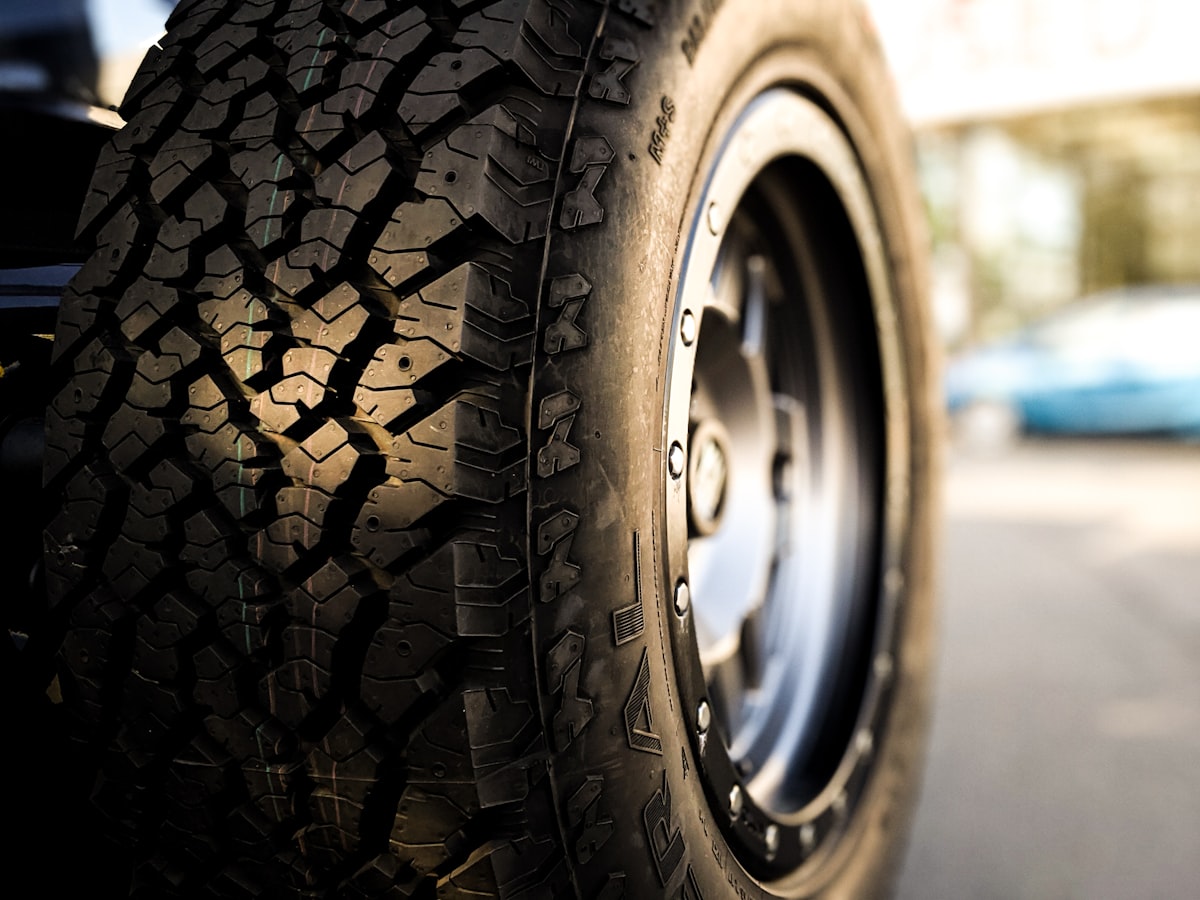
Tires are the only part of your car that actually touches the road, which makes them the single most important safety component you own — and also the one people push furthest past its useful life, because a worn tire looks basically like a new one until you know what to look for. Around here, where the roads are wet for a good chunk of the year, worn tires are not an abstract risk. They are the difference between stopping and sliding on a rainy freeway. So it is worth knowing, clearly, when you actually need new tires rather than guessing or waiting for a blowout to decide for you.
The most important thing a tire does in the wet is channel water out from under itself so the rubber can still grip the road. That is what the tread grooves are for. As the tread wears down, there is less room to move the water, and at some point the tire starts riding up on a film of water instead of gripping — hydroplaning — which is exactly as bad as it sounds. So tread depth is the number that matters most.
You do not need a gauge to get a good sense of it. Two quick home checks:
This one catches people out, especially on cars that do not cover many miles. Rubber ages. Over years it hardens, dries, and cracks from the inside out, losing grip and becoming prone to failure — regardless of how much tread is left. A tire with plenty of tread that is ten years old is not a good tire. Most manufacturers suggest replacing tires around six years old, and treating anything approaching ten as done no matter what the tread shows. You can read the age off the sidewall: the last four digits of the DOT code are the week and year it was made. If yours are older than you would guess and showing fine cracks in the sidewall or the tread, age is telling you something the tread depth is not.
If one edge of a tire is worn much more than the other, or you can feel a scalloped, feathered pattern running your hand across the tread, something is wearing it unevenly — often an alignment or a suspension issue. New tires alone will not fix the cause, so uneven wear is a flag to check the alignment as well as the tires. Left alone, a bad alignment eats a new set as fast as it ate the last.
Cracks in the sidewall, a bulge or blister anywhere on the tire, or damage from a serious pothole or curb hit are reasons to replace a tire regardless of tread. A bulge in particular means the tire's internal structure has been damaged, and that is a blowout waiting to happen — do not drive far on it.
A new vibration can be a tire problem, and a tire that keeps losing pressure has a leak that needs finding — sometimes repairable, sometimes not, depending on where and how bad. Either is a reason to have the tires looked at properly.
In a place that is dry most of the year, worn tires are mostly a fair-weather gamble. In western Washington, where the roads are wet for months, tread depth directly controls how far your car takes to stop and how likely it is to hydroplane on the freeway. A tire that would be “fine for a while” in Arizona can be genuinely marginal on a soaked stretch of SR-512 in November. That is the honest reason we push people not to run tires to the absolute limit here — the limit in the wet arrives sooner. It is the same theme as the rest of winter prep, which our Pacific Northwest winter guide covers: the wet is the thing to plan around.
New tires are an investment, and a few habits protect it: keeping them at the correct pressure (low pressure wears the edges and wastes fuel), rotating them so they wear evenly, and keeping the alignment in check so the car is not scrubbing them sideways. Do those and a set of tires gives you its full life rather than an early exit. Skip them and you buy tires more often than you should.
Check the tread with the quarter test — if you can always see the top of Washington's head in the groove, start planning for new ones — or look at the wear bars, and replace when the tread is flush with them. Also replace for age (rubber over about six years, definitely approaching ten), uneven wear, cracks or bulges, or a tire that keeps losing pressure.
It depends on the tire, the miles, and how they are cared for — often several years and tens of thousands of miles — but age matters as much as mileage. Even with good tread, rubber that is six or more years old is aging out, and by around ten years a tire should be replaced regardless of how it looks. Pressure, rotation, and alignment all affect how long a set really lasts.
Not always, but it is often best, especially on all-wheel-drive vehicles, which can be sensitive to mismatched tire sizes. On other cars you can sometimes replace in pairs (both on the same axle), keeping the newer, deeper-tread tires on the rear for stability in the wet. What is right depends on your car and how worn the others are, which we are happy to advise on.
It is riskier than people realise. Worn tread cannot clear water, so stopping distances grow and the tire is far more likely to hydroplane — and around here the roads are wet for months. If your tread is low, wet weather is exactly when it matters most, and the time to replace them is before the worst of it, not after a scare.
It depends on your vehicle and the tire, which vary a lot. We can check your current tires, tell you honestly how much life is left, and go over options and pricing before anything is decided — no pressure to replace tires that still have good, safe tread. Call (253) 375-7057 to talk it through.
If you cannot tell whether your tires are fine or finished — and heading into the wet season is the moment to know — we will measure the tread, check the age and condition, and tell you straight where they stand. We are on Meridian E in Graham, open Monday to Friday. Call (253) 375-7057 or book a time online.
Bring it in and we will tell you what it actually needs. Open Monday to Friday, 9am to 5pm.
Few things are less welcome on a frosty morning than a heater that blows cold. It's more than a comfort problem in winter — the…
A car that starts, but only just — cranking longer than it should before it catches — is heading toward one that won't start at…
Wheel alignment is easy to skip because nothing dramatic happens when it's off. Instead it quietly wears your tires out faster…
Tell us the noise, the light, or the mileage. We will tell you what it takes.