
Do you really need to warm up your car before driving?
Every fall the question comes back: should you let the car warm up before driving? For basically every modern car, the long idle…
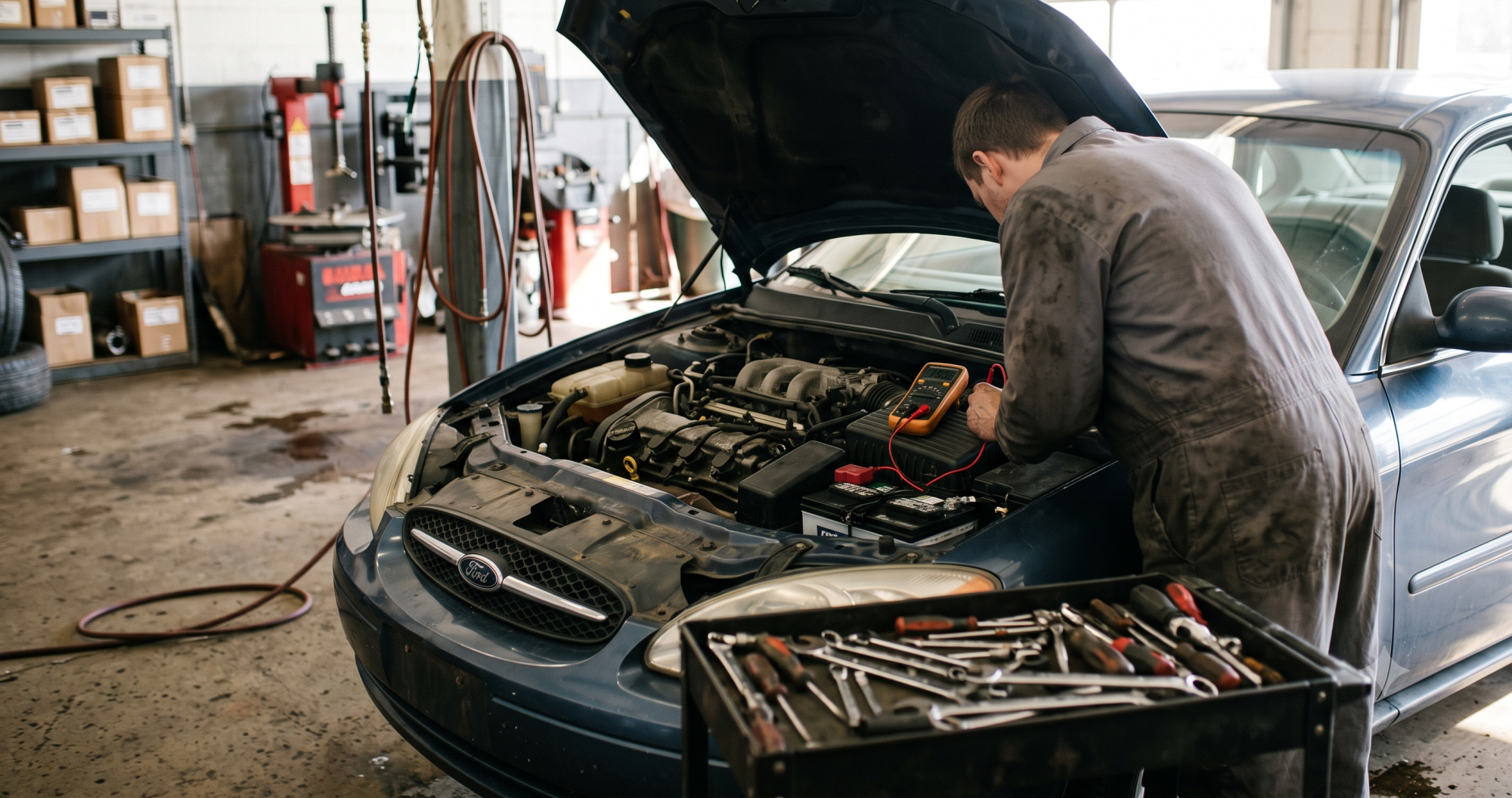
You bought a new battery, and a few weeks later the car is dead again. It is one of the most frustrating car problems there is, because the obvious fix — a new battery — is exactly the thing that didn't work. Here is the key: a healthy battery that keeps going flat is almost never the real problem. It is a symptom of something else draining it or failing to charge it. Track that down and the dying stops.
Your battery only has two jobs: start the car, then get recharged by the alternator while you drive. If a brand-new battery keeps ending up flat, one of two things is happening — something is draining it faster than it should while the car is off, or the charging system isn't refilling it while the car is on. Replacing the battery again just puts a fresh victim into the same situation.
This is the most common culprit. The alternator recharges the battery as you drive. When it weakens or fails, the car quietly runs off the battery until it is empty — so a battery that keeps "dying" is very often a battery that is never being properly recharged. If your headlights dim at idle, the dash battery light flickers, or the car dies again a day after a jump, the alternator is the prime suspect. This is the same fault behind a lot of no-start problems.
Something in the car is staying awake while it should be asleep — a glovebox or trunk light that never turns off, an aftermarket accessory wired badly, a stuck relay, a module that won't power down. A small constant draw will flatten even a new battery over a night or two, especially if the car sits.
Corroded or loose terminals stop a good battery charging and discharging cleanly. And occasionally a new battery is simply a dud, or was sitting discharged on a shelf for months before you bought it. These are the less common causes, but they are quick to rule out.
The pattern tells the story:
None of these is a guess we like to make blind, though — the real answer comes from testing.
We test the whole picture rather than just the battery: the battery's actual health, the alternator's charging output under load, and — if it dies while sitting — a parasitic-draw test to find what is staying awake. That last one is real detective work, isolating circuits until the culprit shows itself. You get told what is actually draining or starving your battery, and what the fix costs, before we do anything.
Treat these as bands. A cleaned-up connection is the low end. An alternator is a moderate repair. Chasing down a parasitic drain is priced mostly by the diagnostic time it takes to isolate. The expensive path is the one where you keep buying batteries — three batteries and a tow cost far more than finding the drain once. If it lands awkwardly, we offer financing on repairs.
Because something else is at fault — usually a failing alternator that isn't recharging it, or a parasitic drain pulling power while the car is off. A healthy battery going flat repeatedly is a symptom, so the fix is finding the drain or charging fault, not another battery.
Yes. If the alternator isn't charging properly, the car runs off the battery until it is empty, and it will keep happening no matter how many new batteries you fit. Dimming lights and a battery warning light are common signs.
A small electrical draw that continues after the car is switched off and everything should be asleep — a light that stays on, a stuck relay, a misbehaving accessory. It slowly flattens the battery, especially when the car sits for a day or two.
Typically three to five years, though heat, cold, short trips, and lots of accessories shorten it. If a battery is failing at a few weeks or months old, it is almost certainly being killed by something else rather than being worn out.
Dying while the car sits points strongly at a parasitic drain — something staying powered when it shouldn't. A charging fault, by contrast, usually shows up while driving. The overnight pattern is a big clue, and a draw test finds the exact circuit.
If a new battery keeps dying, the answer isn't another battery, it is finding what is killing it. We test the battery, the charging system, and for parasitic drains, so you fix it once. We are on Meridian E in Graham, open Monday to Friday. Here is what our battery and electrical service covers, or call (253) 375-7057 or book online.
Bring it in and we will tell you what it actually needs. Open Monday to Friday, 9am to 5pm.
Every fall the question comes back: should you let the car warm up before driving? For basically every modern car, the long idle…
A car that shudders at a red light but drives fine is a common complaint — and a different problem from a shake at highway speed…
A burning smell is your car burning something it shouldn't be, and what that something is ranges from harmless to the early…
Tell us the noise, the light, or the mileage. We will tell you what it takes.