
Winter tires vs. all-season in the Pacific Northwest
Do you actually need winter tires in western Washington, or are your all-seasons enough? We don't get buried in snow, but we get…
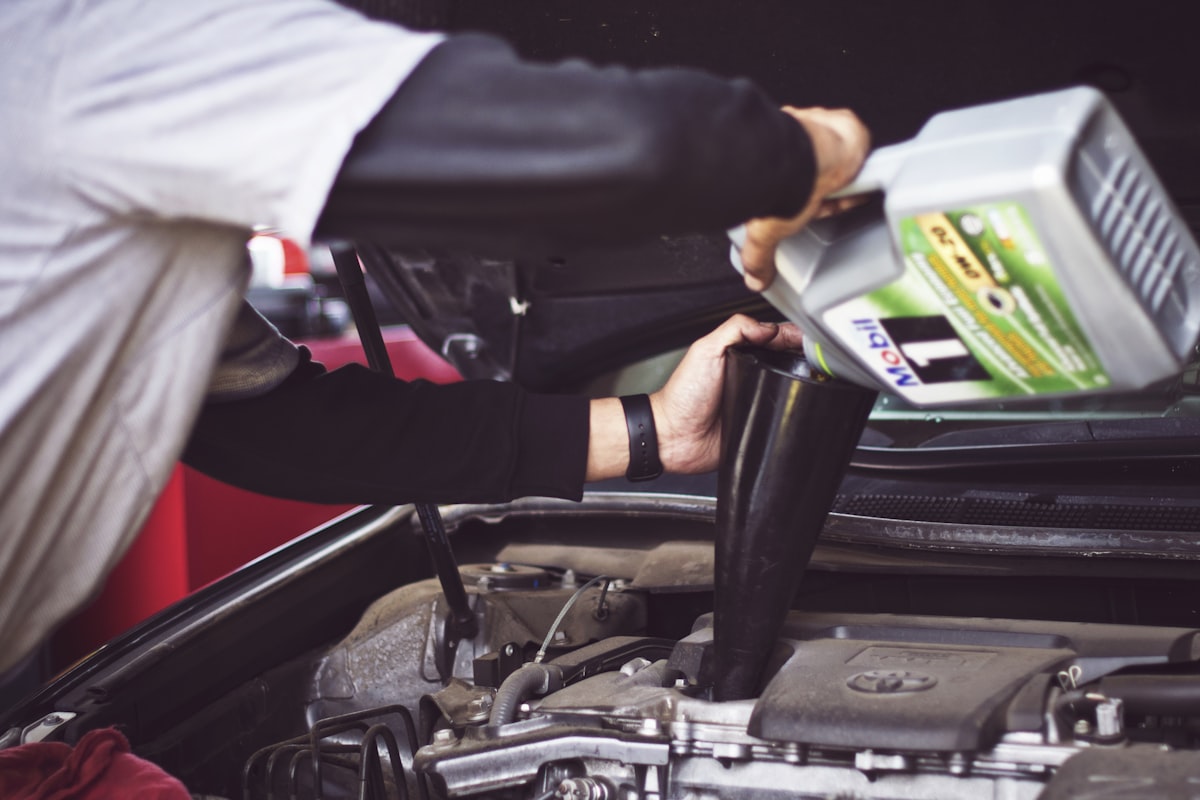
If you still change your oil every 3,000 miles, you are probably spending money you don't need to — and if you drive mostly short trips around Graham, you might be going too long between changes without realising it. The 3,000-mile rule is a leftover from an era of different oil and different engines. Here is what actually decides how often your car needs an oil change, why the honest answer is "it depends," and how to tell when yours is genuinely due.
Decades ago, engines ran on conventional oil that broke down faster, and 3,000 miles was sensible insurance. Two things kept the number alive long after it stopped being true: it is easy to remember, and quick-lube shops have every reason to want you back four times a year. The oil got dramatically better; the sticker on your windshield didn't.
Modern oils — especially synthetics — hold up far longer, and modern engines are built around that. For a lot of cars, 3,000 miles now means throwing away oil that has thousands of good miles left in it.
There is no single right number, because three things decide it together.
The manufacturer tested your exact engine and printed the interval it needs — commonly anywhere from 5,000 to 10,000 miles for modern cars. That number, not a shop's default, is the starting point. If you don't have the manual, we can look up your car's spec for you.
Full synthetic oil resists heat and breakdown much better than conventional, which is why cars that call for it run longer intervals. Putting a longer-lasting oil in and then changing it at 3,000 miles is paying twice: once for the better oil, once for changing it too soon.
Here is the twist that catches people out. Manufacturers list two schedules: "normal" and "severe." Most drivers assume they are "normal." But "severe" includes short trips, stop-and-go traffic, cold-weather starts, towing, and dusty roads — which describes a huge share of everyday driving. If most of your miles are short hops around town, you are on the severe schedule, and you should change your oil sooner, not later.
It sounds backwards, but a car that only does short trips is tougher on its oil than one that cruises the highway. On a short drive the engine never fully warms up, so moisture and fuel that get into the oil never burn off — they build up and thin the oil out. A long, steady drive gets everything hot enough to cook that contamination away. So the person doing a five-minute commute and school runs around Graham may need oil changes more often than someone putting on twice the miles on the interstate. Mileage alone doesn't tell the whole story.
An oil change is a cheap, regular chance to catch expensive problems early — if it is done properly. When your car is up, we don't just drain and refill: we replace the filter, check for leaks around the pan and seals, look at the belts and hoses, check the other fluids, and note anything starting to wear. That is the difference between a drive-through splash-and-dash and a service that quietly saves you from a bigger bill later.
An oil change is one of the least expensive things you will do for your car, and the exact price depends mostly on your oil type and capacity — a full-synthetic engine that takes more oil costs a bit more than a small conventional one. Treat it as a band, and remember the real value is not the oil, it is the pair of trained eyes that go over the car while it is on the lift.
Follow your owner's manual — commonly 5,000 to 10,000 miles for modern cars on synthetic — and shorten it if you mostly do short trips, stop-and-go, towing, or cold starts. If your car has an oil-life monitor, trust it. When in doubt, we can look up your car's exact interval.
Not harmful to the engine, just wasteful for most modern cars — you are paying to throw away oil with plenty of life left. The one exception is severe-duty driving, where a shorter interval is genuinely warranted.
Full synthetic typically goes 7,500 to 10,000 miles, but your manual's number for your engine is the one to follow, adjusted down for severe-duty driving.
Yes. Short trips don't let the engine fully warm up, so fuel and moisture build up in the oil instead of burning off. That is exactly the "severe" driving manufacturers warn about — and it is a lot of everyday driving.
Old oil loses its ability to lubricate and carry away heat, and sludge builds up. Left long enough, that leads to accelerated wear and, in the worst cases, expensive engine damage. Regular changes are the cheapest engine insurance there is.
Tell us your year, make, model, and how you drive, and we will give you the honest interval for your car — not a default. We are on Meridian E in Graham, open Monday to Friday. Here is what our oil change service includes, or read up on choosing the right motor oil. Call (253) 375-7057 or book online.
Bring it in and we will tell you what it actually needs. Open Monday to Friday, 9am to 5pm.
Do you actually need winter tires in western Washington, or are your all-seasons enough? We don't get buried in snow, but we get…
The oil level keeps dropping but there's no puddle — so where is it going? A car that uses oil without leaking it is burning it…
Tire rotation is one of the cheapest, most-skipped pieces of maintenance there is — and skipping it wears out a set of tires…
Tell us the noise, the light, or the mileage. We will tell you what it takes.