
Clunking or knocking over bumps? Here's what it usually means
Go over a bump and the car answers with a clunk from underneath. It's easy to tune out, but it's almost always your suspension…
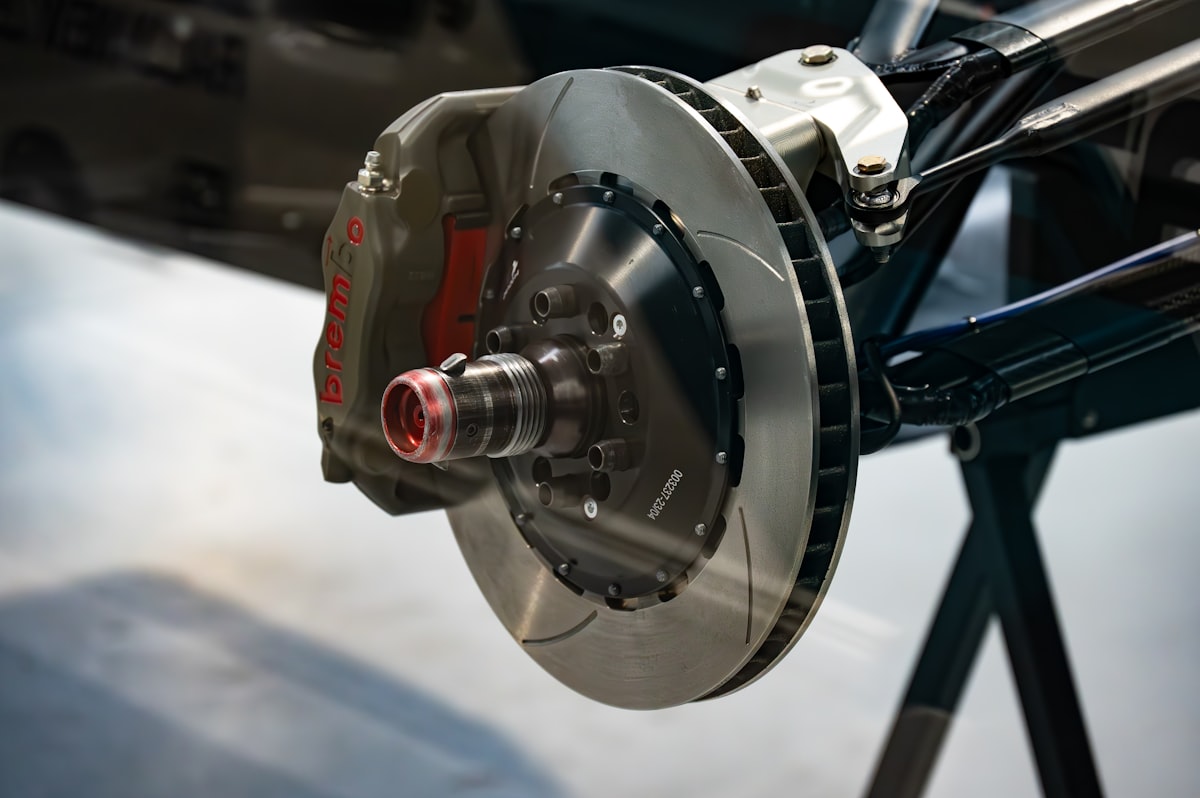
Almost everyone knows brakes wear out — pads, rotors, the parts you can see and hear. Far fewer people ever think about brake fluid, which is a shame, because it is the thing that actually makes your brakes work, and it quietly goes bad on a schedule of its own regardless of how much tread is left on your pads. It is one of the most overlooked services on a car, it is inexpensive, and neglecting it can cost you braking performance exactly when you need it most. Here is what brake fluid does, why it goes bad, and when it is worth changing.
When you press the brake pedal, you are not mechanically pushing the pads onto the rotors yourself. You are pushing on a column of fluid. That brake fluid runs through the lines to each wheel, and the pressure you create at the pedal is what squeezes the pads against the rotors. The whole system works because the fluid does not compress — push on one end and the force comes straight out the other. Your entire ability to stop depends on that fluid doing its job, which is why its condition matters as much as the pads.
Here is the crucial thing about brake fluid: it is hygroscopic, which is a fancy way of saying it absorbs moisture from the air. Over time, tiny amounts of water work their way into the system through seals and hoses, and the fluid soaks it up. That matters for two reasons, and both are about heat.
Braking creates a lot of heat — that is literally how it works, turning your car's motion into heat at the pads and rotors. Fresh brake fluid has a high boiling point and shrugs that heat off. But water boils at a much lower temperature than brake fluid, so as the fluid absorbs moisture, its boiling point drops. Push the brakes hard enough — a long downhill, a panic stop, towing — and the water in old fluid can boil. When fluid boils it turns to gas, and gas does compress, so the pedal goes soft or sinks to the floor and the brakes fade right when you are asking the most of them. That is the nightmare scenario, and it is entirely preventable.
The second reason is corrosion. The moisture in old fluid rusts the metal components inside the brake system from the inside out — expensive parts like calipers and the master cylinder — turning a cheap fluid change you skipped into a much bigger repair down the line.
Because brake fluid degrades by absorbing moisture over time rather than by mileage, the interval is more about years than miles. A common recommendation is every two to three years, though it varies by vehicle, so your owner's manual has the specific figure. The condition also tells the story: fresh brake fluid is clear to light gold, and as it ages and takes on moisture and contamination it darkens toward brown. Dark, murky brake fluid is old fluid that has been quietly losing its ability to resist heat.
There is a simple test we can do that measures the moisture content or boiling point of the fluid directly, which takes the guessing out of it — rather than going purely by the calendar, we can tell you where your fluid actually is. It is a quick check, and it is the honest way to know whether it needs doing now or can wait.
One important note: brake fluid should not simply keep dropping in the reservoir. A little drop as the pads wear is normal, but fluid that keeps needing topping up usually means a leak — and a brake fluid leak is a serious safety problem, not a top-up-and-forget one. If you are adding fluid regularly, that needs looking at, not ignoring.
Of all the maintenance that never feels urgent, brake fluid is one of the best value. It is an inexpensive service that protects your braking performance in an emergency and prevents corrosion damage to expensive brake parts. It pairs naturally with the brake work people actually think about — if you are in for pads and rotors, it is the sensible moment to refresh the fluid too. If you have been hearing grinding or squealing from the brakes, that is a separate, more urgent flag, but the fluid is part of the same conversation about the system that stops your car.
Because it degrades by absorbing moisture over time rather than by mileage, it is usually a matter of every two to three years, though it varies by vehicle — your owner's manual has the specific figure. The condition matters too: fresh fluid is clear to light gold and darkens to brown as it ages. A quick test of the fluid's moisture or boiling point takes the guessing out of it.
Two things, both bad. The fluid absorbs water, which lowers its boiling point, so under hard braking the water can boil and your pedal goes soft and the brakes fade right when you need them. And the moisture corrodes expensive brake components from the inside, turning a cheap service you skipped into a much larger repair.
A soft or sinking pedal can mean moisture in aging fluid, air in the system, or, importantly, a leak. It is one of the clearer signs that the brake fluid or the hydraulic system needs attention, and because it involves your ability to stop, it is worth having checked promptly rather than waited on.
Fresh brake fluid is clear to light gold; it darkens toward brown as it absorbs moisture and picks up contamination. So dark, murky fluid is a sign it is old and has been losing its ability to resist heat. It is a good visual cue that the fluid is due, though a direct test of its moisture content is the definitive check.
It is one of the more affordable brake services, and it protects far more expensive parts down the line. We can test your fluid, tell you honestly whether it needs doing now, and give you the price before any work — and it pairs well with any other brake work you are due for. Call (253) 375-7057 for a straight answer for your vehicle.
Brake fluid is easy to forget and cheap to service, and it is what stands between you and a soft pedal on a long wet descent. We are on Meridian E in Graham, open Monday to Friday, and we will test your fluid and tell you honestly where it stands — no pushing a service you do not need yet. See what our brake service covers, call (253) 375-7057, or book a time online.
Bring it in and we will tell you what it actually needs. Open Monday to Friday, 9am to 5pm.
Go over a bump and the car answers with a clunk from underneath. It's easy to tune out, but it's almost always your suspension…
Tires are the only part of your car that touches the road, and the one people push furthest past its useful life — because a worn…
Few things are less welcome on a frosty morning than a heater that blows cold. It's more than a comfort problem in winter — the…
Tell us the noise, the light, or the mileage. We will tell you what it takes.