
Brake fluid: why it matters and when to change it
Everyone knows brake pads wear out. Far fewer think about brake fluid — the thing that actually makes your brakes work, which…
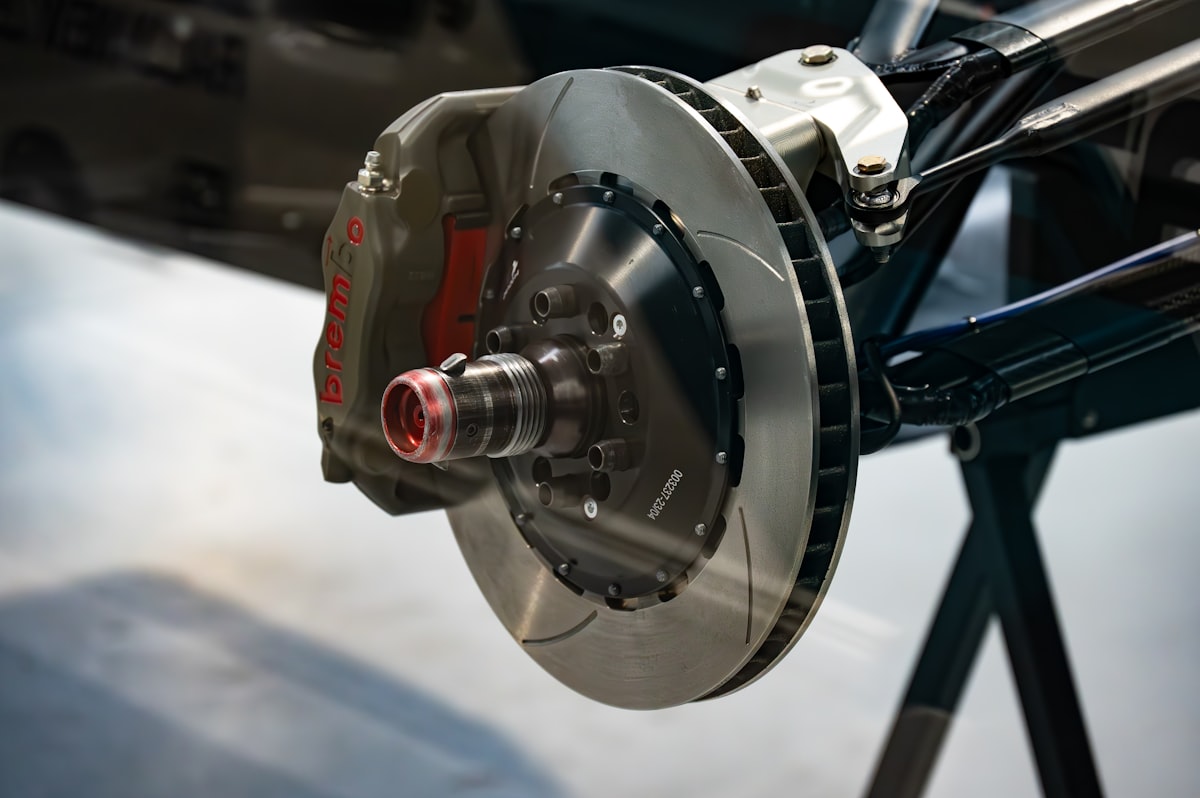
You are coming down to a stop, you press the brake, and the steering wheel starts to shimmy in your hands — or you feel a pulsing through the brake pedal and the seat. It is one of the more common complaints we get, and it is a specific one: a shake that shows up when you brake, and mostly fades when you are not braking, is telling a different story than a shake you feel cruising down the freeway. Here is what it usually means, why it happens, and why it is worth sorting sooner rather than later.
This is the question that splits the diagnosis in half, so it is worth being precise. A vibration you feel at highway speed even when you are not braking is almost always a wheel-balance or tire problem. A shake that appears only when you apply the brakes — in the wheel, the pedal, or the whole car — is a brake problem, and usually points at one thing: the brake rotors.
Your brakes work by squeezing a pair of pads against a spinning steel disc — the rotor — at each wheel. For that to feel smooth, the rotor has to be flat and an even thickness all the way around. When a rotor is warped, or has worn unevenly so it has thick and thin spots, the pads grab harder and softer as it spins. That rise and fall, many times a second, is the pulsing you feel. Because the front brakes do most of the work and the front wheels steer, a warped front rotor usually shows up as a shimmy in the steering wheel; a warped rear rotor is felt more in the seat and the pedal.
Rotors do not usually warp on their own. A few things get them there:
In the short term, a mild shake when braking is not usually an emergency — the brakes still stop the car. But it is a warning worth acting on for two reasons. First, whatever is causing it tends to get worse: a warped rotor does not un-warp, and a sticking caliper or worn pad keeps chewing. Second, a shake means your braking is no longer smooth and even, which lengthens stopping distances and stresses steering and suspension parts. If the shake is severe, the car pulls when you brake, or you also hear grinding, do not put it off — that is past the warning stage.
The fix depends on how far it has gone. If the rotors are only lightly uneven and still have enough thickness, they can sometimes be machined flat again — but modern rotors are often too thin to safely cut, so on many cars the honest answer is new rotors and pads as a pair, which is what gives you a smooth, lasting result. We measure the rotor thickness and check for a sticking caliper before we tell you which it is, because replacing rotors on a car with a stuck caliper just warps the new ones too. When your car is on the lift we also check the pads, the caliper slides, and the wheel balance, so we are not mistaking a balance shimmy for a brake one. You will see what came off the car, and we will tell you honestly whether it needed replacing or just cleaning up.
Almost always because a front brake rotor is warped or worn unevenly. As the uneven rotor spins, the pads grab harder and softer many times a second, and because the front wheels steer, you feel that pulsing as a shimmy in the wheel. A shake felt in the seat or pedal instead usually points at the rear rotors.
They are different problems. A shake at highway speed when you are not braking is usually a wheel-balance or tire issue. A shake that appears only when you apply the brakes is a brake issue, most often the rotors. Noticing exactly when it happens is the single most useful clue you can give us.
It depends on their condition. Lightly uneven rotors with enough thickness left can sometimes be machined flat again, but many modern rotors are too thin to cut safely, so replacing the rotors and pads together is often the proper, lasting fix. We measure them before deciding, and we check for a sticking caliper first, since that will warp new rotors just as fast.
A mild shudder is usually safe for a short while, but it will not fix itself and your braking is no longer smooth, which lengthens stopping distances. If it is severe, the car pulls when braking, or you hear grinding, stop putting it off and get it looked at — that is past a warning.
It depends whether the rotors can be machined or need replacing, and whether a caliper is involved — which is exactly what the inspection tells us. We go over the price before any work. Call (253) 375-7057 for a straight answer for your vehicle.
A shudder when braking is your car pointing right at the problem. We are on Meridian E in Graham, open Monday to Friday, and we will measure the rotors, check the calipers, and tell you honestly what it needs. See what our brake service covers, call (253) 375-7057, or book a time online.
Bring it in and we will tell you what it actually needs. Open Monday to Friday, 9am to 5pm.
Everyone knows brake pads wear out. Far fewer think about brake fluid — the thing that actually makes your brakes work, which…
Go over a bump and the car answers with a clunk from underneath. It's easy to tune out, but it's almost always your suspension…
Tires are the only part of your car that touches the road, and the one people push furthest past its useful life — because a worn…
Tell us the noise, the light, or the mileage. We will tell you what it takes.