
Winter tires vs. all-season in the Pacific Northwest
Do you actually need winter tires in western Washington, or are your all-seasons enough? We don't get buried in snow, but we get…
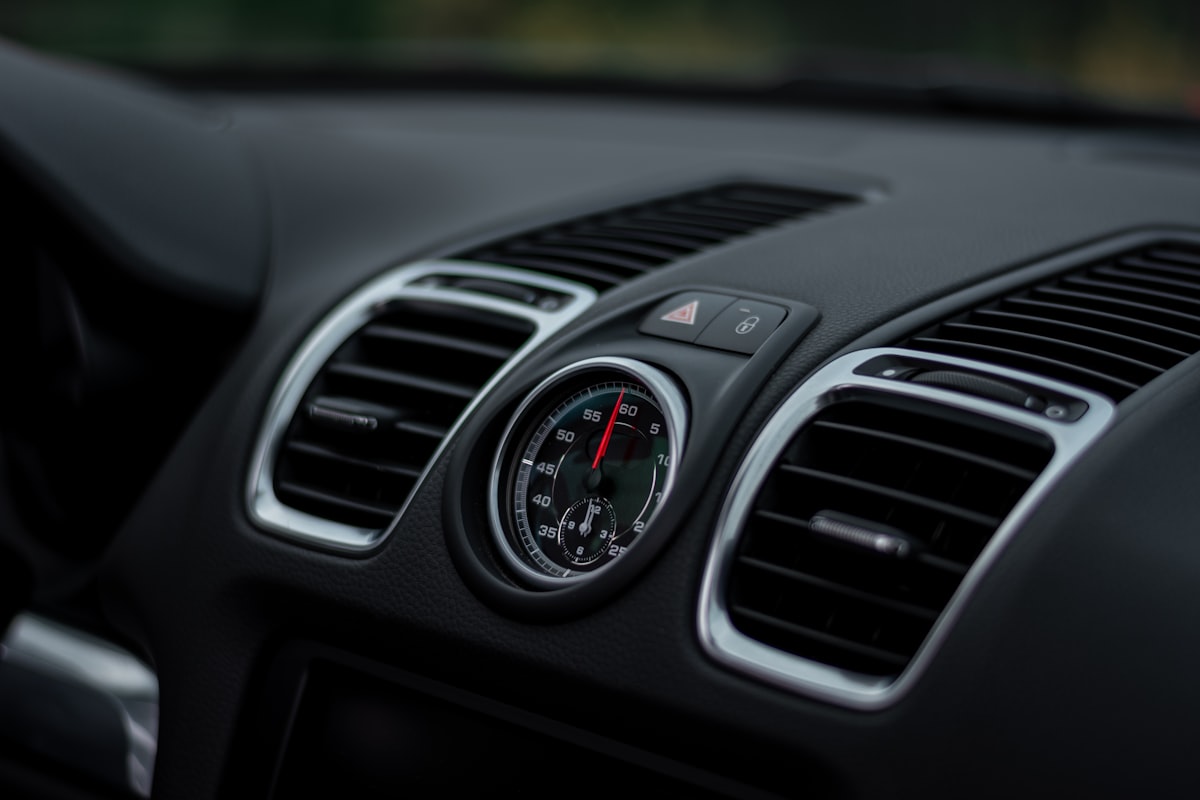
When your car's air conditioning quits in July, it is easy to shrug and wait for cooler weather. Here is why that is a mistake: your defroster runs through the exact same system. A broken A/C isn't just a summer comfort problem — it is a winter visibility problem, and the cheapest, easiest time to fix it is the off-season, before you actually need it to clear a foggy windshield on a cold Graham morning.
This surprises a lot of people. When you push the defrost button, your car doesn't just blow warm air at the glass — it runs that air through the air-conditioning system first to pull the moisture out of it, then reheats it. Dry air clears fog fast; humid air just smears it around. So the A/C compressor is working every time you defrost, summer or winter.
That means if your A/C stopped blowing cold in summer, your defrost is very likely compromised too. You just won't find out until the first cold, damp morning when the windshield fogs over and won't clear — which is the worst possible time to discover it.
"The A/C is broken" covers a few different faults, and the symptom points at which one.
Usually low refrigerant from a leak, or a failing compressor or clutch. Refrigerant doesn't get "used up" — if it is low, it leaked out somewhere, and that leak needs finding, not just topping up.
Often a clogged cabin air filter or a failing blower motor. A cabin filter packed with a year of Pacific Northwest pollen and leaves chokes airflow to both your A/C and your heat.
This is the tell that the A/C side of your defrost has quit. If the defroster used to clear the glass quickly and now takes forever or never fully does, the compressor is likely not engaging.
An A/C fix starts with finding the actual fault instead of blindly adding refrigerant. We check the system pressures, look for leaks (often with dye or an electronic sniffer), test whether the compressor and clutch engage, and check the airflow side — blower and cabin filter. Then we tell you whether it is a recharge, a leak repair, or a compressor, and what it costs, before we do the work. Adding refrigerant to a leaking system just vents it into the air and leaves you back where you started; we would rather fix it once.
Treat these as bands. A cabin filter or a recharge on a system that only needs a small top-up is the low end. A leak repair — a hose, an O-ring, a condenser — is the middle. A compressor is the top, which is exactly why catching a small leak before it starves the compressor saves you real money. If the timing is awkward, we offer financing on repairs.
Because dry air clears fog far faster than warm, humid air. The defrost setting runs cabin air through the A/C system to remove its moisture, then reheats it, so the A/C compressor is working whenever you defrost — even in winter.
You can, but your defrost will be weaker, which is a real safety issue on foggy or frosty mornings when you need the windshield clear. That is the case for fixing it in the off-season rather than waiting for summer.
Most often the refrigerant is low because of a leak, or the compressor isn't engaging. Since refrigerant doesn't get consumed, "low" means it escaped somewhere — so the fix is finding the leak, not just refilling it.
A simple recharge is one of the cheaper A/C jobs, but if the system was low, there is a leak to find, and recharging without fixing it is temporary. We will check for the leak first so you are not paying to refill the same system twice.
That usually means the A/C part of your defrost isn't working, so the air hitting the glass is still humid. It is a sign the compressor isn't engaging — the same fault that would leave your A/C warm in summer.
If your A/C quit this summer, don't wait for it to become a foggy-windshield problem. The off-season is the cheapest, quickest time to sort it. We are on Meridian E in Graham, open Monday to Friday. Here is what our heating and A/C service covers, or call (253) 375-7057 or book a time online.
Bring it in and we will tell you what it actually needs. Open Monday to Friday, 9am to 5pm.
Do you actually need winter tires in western Washington, or are your all-seasons enough? We don't get buried in snow, but we get…
The oil level keeps dropping but there's no puddle — so where is it going? A car that uses oil without leaking it is burning it…
Tire rotation is one of the cheapest, most-skipped pieces of maintenance there is — and skipping it wears out a set of tires…
Tell us the noise, the light, or the mileage. We will tell you what it takes.